Pop Us!
- 4.3
- Rating
- 50.00M
- Installs
- Free
- Price

 Analysis by App-foxy
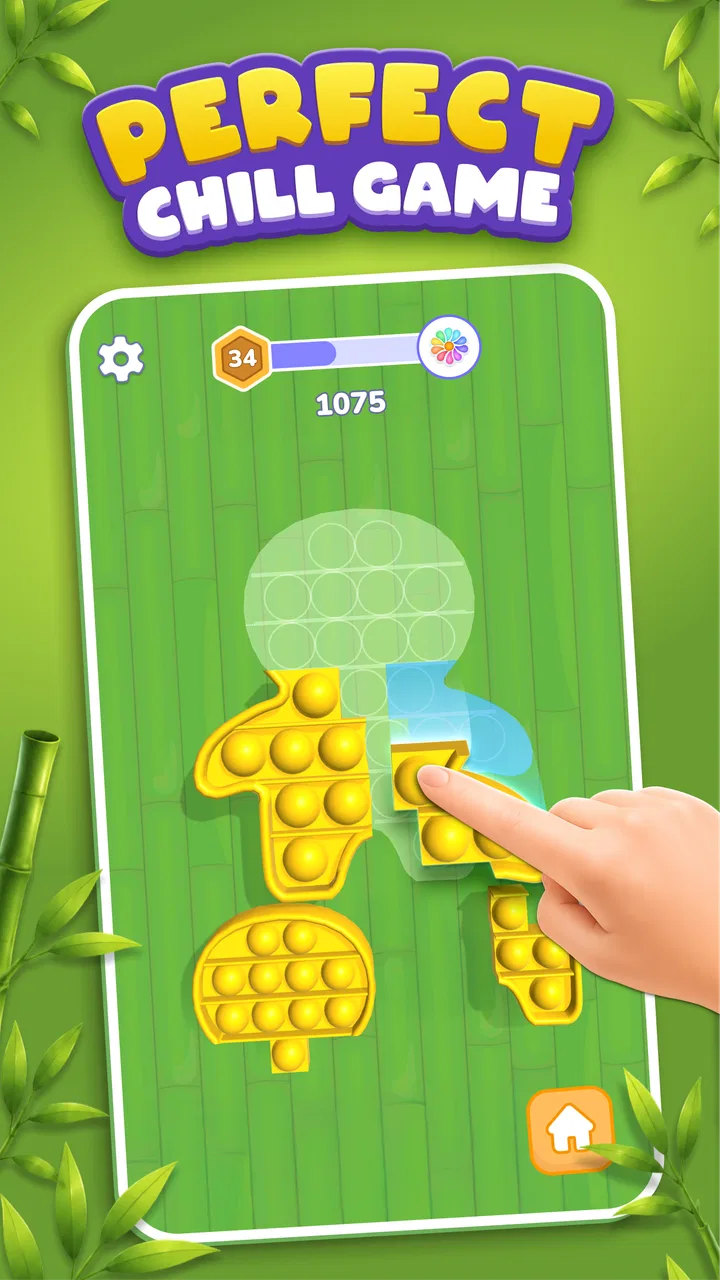
I expected a very simple time-killer from Pop Us!, and that is exactly what I found: a colorful simulation game built around popping objects on the screen. The appeal is immediate. You touch, something gives way, the screen reacts, and your attention settles into a small, satisfying rhythm. It is not trying to be a deep management simulator or a story-driven adventure. Its purpose is much narrower and, when I want that kind of distraction, quite effective.
After spending time with it, I see the game as a pocket reset button rather than a title I would play for long, planned sessions. It suits the moment when I am waiting for an appointment, taking a short break, or trying to stop scrolling through more demanding apps. The action is easy to understand, the presentation is bright, and the low barrier to entry makes it suitable for a broad audience. At the same time, that simplicity is also the main limitation: players looking for strategy, progression with real depth, or a strong long-term challenge may run out of reasons to return.
How the popping loop works in practice
I focus on what makes the first few minutes easy to understand and what can make repeated play feel thin. The useful question is whether the popping rhythm itself holds your attention, so I’ll look at how to approach a short session without expecting it to behave like a deeper simulation.
You May Also Like

 Blood Strike: 2.5 Anniversary
Blood Strike’s Loadouts Turn Every Drop Into a Tactical Gamble
A close look at Blood Strike’s custom loadouts: how fast access to signature weapons reshapes its battle royale rhythm, rewards preparation, and narrows the gap between fights.

 Pandora - Music & Podcasts
Pandora’s Music Is Easy to Start, but Harder to Recover
Pandora’s strength is its low-effort path from a seed to a station. Its weak spot is how much confidence it asks you to place in connection, setup, and quiet recovery.

 8 Ball Pool
 Is Built on Rivalries, Rematches, and Routine
A close look at the rivalries, rematches, shared routines, and unanswered safety questions that turn a quick pool match into a persistent mobile community.

 Samsung Music
’s Quiet Strength Is Playing What You Already Own
Its reach comes less from spectacle than from dependable access to a personal library. That simplicity is both the app’s strongest retention engine and its ceiling.

 AccuWeather: Weather Radar
AccuWeather Review: A Quick, Clear Forecast for Everyday Decisions
For everyday plans, the best forecast is the one you can understand quickly. AccuWeather makes rain timing, radar, and local conditions easy to act on, with a few trade-offs.

 Hill Climb Racing
Why Hill Climb Racing Still Turns Crashes Into One More Run
A tiny car, a bumpy hill and one more upgrade: Hill Climb Racing keeps resurfacing because its simple chaos makes every near-miss feel personal.
More From Our News Desk
View All News


The first touch gives the game its answer
The first action is almost impossible to misunderstand. I press a pop, watch the object respond, and immediately know what the game wants from me. There is no complicated control scheme to learn and no need to study a tutorial before the basic interaction makes sense. That directness matters because the game is designed for short bursts. I can open it with no preparation and start playing within moments.
The touch interaction feels more like handling a digital fidget object than operating a traditional simulation. I am not building a city, balancing resources, or making decisions that reshape a larger system. Instead, I am completing a sequence of small tactile actions. Each one supplies a tiny response, and the next available action keeps the process moving. The game’s colorful style supports that idea by making the screen feel playful rather than serious.
For a child, the controls are approachable because the main gesture is so clear. For an adult, the same simplicity can be useful after a tiring day. I do not need to remember a complicated objective or worry about losing a carefully developed run. That makes it a particularly easy game to recommend to someone who wants a casual distraction rather than a hobby that demands regular commitment.
Why the feedback rhythm is the real attraction
The important part is not any single pop. It is the rhythm created by repeating the action. I touch, receive visual feedback, find the next target, and touch again. That cycle produces a mild sense of progress without asking me to make difficult choices. The feedback is quick enough to keep the interaction flowing, so the game rarely feels slow during its intended short sessions.
I found this rhythm most useful when I wanted something to occupy my hands while keeping my mind lightly engaged. For example, during a short wait before a train, I could play for a few minutes without needing sound, a long explanation, or a large amount of concentration. The game gives me a defined activity, but it does not punish me for putting it down when my wait ends.
There is also a useful distinction between relaxation and stimulation here. This is not a demanding reflex game where I must react under pressure. It is calmer and more repetitive. If I am looking for a challenge that tests timing or planning, I would choose a puzzle game or an arcade title instead. If I want a predictable sequence of small actions, this format makes more sense.
The reward is immediate, but intentionally modest
The reward comes from completion and sensory response rather than from a complex achievement system. Finishing a set of pops gives me the feeling that I have cleared something, even though the task itself is deliberately small. That modest scale is part of the charm. I can enjoy a complete moment of progress without investing enough time to feel tied to the game.
In my experience, this works best when I treat each sequence as a miniature break. I do not open it expecting a dramatic payoff. I open it because the repeated action is pleasant and the result arrives quickly. The game’s store summary describes it as an anti-stress experience, and that description fits the way I used it: not as a replacement for serious stress management, but as a light distraction that can interrupt a restless moment.
The reward also depends on personal tolerance for repetition. Some players will enjoy the steady feedback precisely because it stays uncomplicated. Others may find that completing similar actions does not provide enough variety. I would not recommend it to someone who needs constant novelty. Its pleasure comes from consistency, not surprise.
What happens when a session resets
The reset is important to the game’s identity. A session does not feel like a permanent project that I must protect or maintain. I can finish a sequence, pause, and return later without needing to reconstruct a complicated plan. That makes the game forgiving, especially for people who play in fragments throughout the day.
This also explains why another session can begin so easily. The previous round gives me a small sense of completion, while the next one offers another brief opportunity to repeat the satisfying process. There is no heavy emotional cost to stopping, and there is no intimidating setup when I return. The loop is action, response, completion, reset, and another invitation to start.
That structure is a strength for casual use, but it limits the feeling of ownership. In a deeper simulation, I might return to inspect a long-term plan or improve a system I have built. Here, I return mainly because the activity itself is pleasant. If the popping interaction stops feeling satisfying, there is not much else to carry the experience.
Where it fits among casual simulation games
Compared with a conventional simulation game, this one removes almost all of the management work. There are no complicated menus competing with the main activity, and I am not expected to understand an economy, schedule, or production chain. Compared with a match-style puzzle game, it feels less focused on solving a board and more focused on the physical sensation of completing simple actions.
That comparison helps explain who should choose it. Players who enjoy organizing virtual spaces, optimizing upgrades, or making decisions with visible consequences will probably get more value from a fuller simulation. Players who want a quick, tactile distraction may prefer this because it starts faster and asks less from them. It occupies a small space between a fidget toy and a casual game.
I would also place it below a traditional puzzle game for anyone who wants measurable improvement. Puzzle games often teach patterns, reward planning, and become more demanding over time. This title is more suitable when I do not want my brain to work that hard. The trade-off is clear: less friction at the beginning, but also less depth for a committed player.
Practical details before installing
The game is free to install, which makes it easy to try without committing money first. It includes in-app purchases priced at $1.99 per item, so I would still pay attention to purchase prompts if a child is using the device. The age rating is Everyone, matching the simple and accessible nature of the interaction.
It comes from SayGames Ltd and has reached over 50 million installs, with an average rating of 4.5 from around 45 thousand ratings. Those figures suggest that the basic idea has connected with a large casual audience, although popularity does not change the central trade-off: the game is broad and approachable because it keeps the formula uncomplicated.
The release date was June 24, 2021, and the current version is 1.1.47. A device running Android 8.0 or later is required. For someone deciding whether to try it, the practical takeaway is straightforward: it is a lightweight choice for a compatible Android phone, especially when I want a free game that can be understood without a long learning period.
Small habits that make the experience better
My first useful tip is to use it as a deliberate stopping point rather than leaving it open indefinitely. Because the loop is so easy to repeat, I can keep going simply because the next action is available. Setting a personal boundary, such as playing through one short sequence and then closing the app, helps preserve the relaxing quality instead of turning the repetition into boredom.
My second tip is to judge it by the quality of a short break, not by the amount of content it offers. If I compare it with a large simulation, it will seem thin. If I compare it with the few minutes I might otherwise spend switching between social feeds, its focused interaction feels more useful. The right question is not whether it can replace a major game, but whether its small loop improves a spare moment.
A third insight is that the reset makes it suitable for interrupted play. I can begin while waiting, stop when called, and return later without feeling that I have abandoned a complicated objective. That is a better fit for fragmented routines than games built around long missions or extended strategic planning. Parents may also appreciate that accessibility, while remembering that any in-app purchase still deserves normal device-level supervision.
There is a trade-off in the visual and tactile focus as well. The bright presentation helps the action feel lively, but players who prefer quiet, minimalist interfaces may find it too cheerful or repetitive. Likewise, anyone seeking a narrative reason to continue will not find the same motivation here as in a story game. The experience is about the immediate loop, not about discovering a world.
Who will enjoy it, and who should skip it
I would recommend it to casual players, people who like simple touch interactions, and anyone searching for a low-pressure way to fill a few spare minutes. It is especially appropriate for someone who does not want to memorize rules before playing. The game’s strongest quality is that it respects a short attention span while still giving each session a clear beginning and end.
I would be more cautious about recommending it to players who need strategic variety, competitive goals, deep customization, or a substantial progression system. If the usual appeal of simulation games is planning and control, this may feel more like a toy than a full game. A puzzle title is a better choice when I want to think through a problem, while a management simulator is better when I want decisions to matter over time.
It is also not the best match for someone who quickly loses interest in repetition. The game does not hide its central action, and the reason to begin another session depends on whether that action remains satisfying. That honesty is valuable: I know what I am downloading, but I should not expect the loop to transform into a much deeper experience after extended play.
My verdict on the complete loop
The strongest reason to play is the clean connection between touch, response, completion, and reset. Pop Us! does not waste time explaining a complicated system because it does not need one. I can open it, pop objects, enjoy the immediate feedback, finish a small sequence, and close the app without feeling that I have missed an important commitment.
That same design prevents it from becoming a long-term favorite for me. The reward is pleasant but light, and the reset brings me back to the same basic reason for playing rather than introducing a deeper goal. Still, that is not a flaw when judged against its intended role. A small game can be successful by being easy to start, easy to stop, and pleasant during the few minutes between larger tasks.
My final recommendation is therefore specific: try it if you want a colorful, free, low-pressure simulation-style game for short breaks and simple tactile satisfaction. Skip it if you are looking for strategy, narrative, or a progression system that keeps unfolding. For the right player, its simplicity is not an empty promise; it is the entire point. I would keep it installed as a quick reset, not as my main game.
FAQs for Pop Us!
01What is Pop Us! and what are its main features?
Pop Us! is an engaging puzzle game available for both Android and iOS platforms. It features a variety of bubble-popping puzzles that challenge your strategic thinking. The game offers colorful graphics, intuitive controls, and multiple levels with increasing difficulty. Additionally, it includes daily challenges and rewards for consistent play.
02Is Pop Us! free to download and play?
Yes, Pop Us! is free to download on both Android and iOS devices. However, it offers in-app purchases for players who wish to enhance their gaming experience. These purchases can include extra lives, power-ups, or ad-free gameplay. Players can enjoy the game without spending money, but these purchases can provide advantages.
03Are there any age restrictions for playing Pop Us!?
Pop Us! is designed to be family-friendly and is suitable for players of all ages. The game features simple mechanics and colorful visuals that appeal to both children and adults. However, parents should be aware of in-app purchases and ensure that kids have appropriate permissions to make purchases if necessary.
04Does Pop Us! require an internet connection to play?
Pop Us! can be played offline, which makes it convenient for users who may not always have access to the internet. However, certain features, such as daily challenges and leaderboard updates, require an internet connection. Playing offline may limit access to some of these features but won’t hinder the core gameplay.
05What should I do if I encounter technical issues with Pop Us!?
If you experience technical issues with Pop Us!, you can try restarting the app or your device first. If problems persist, check for updates as the developers frequently release patches to fix bugs. You can also contact the app's support team through the app store or the developer's website for further assistance.
Pros
- Engaging and interactive bubble-popping gameplay.
- Colorful and vibrant graphics enhance fun.
- Intuitive controls suitable for all ages.
- Frequent updates with new levels and features.
- Offline play available for uninterrupted gaming.
Cons
- Can become repetitive over time.
- In-app ads may disrupt gameplay.
- Limited rewards for consistent players.
- Some levels require in-app purchases.
- Lacks a multiplayer mode for social play.

Pop Us!
Gallery